


Jungle Kitten · Practical cat care
How to clicker train a Bengal cat: three useful skills before fancy tricks
A cat that can high-five is delightful. A cat that walks into its carrier willingly is useful on the morning of a veterinary appointment. Start with skills that make everyday life easier; the applause can come later.
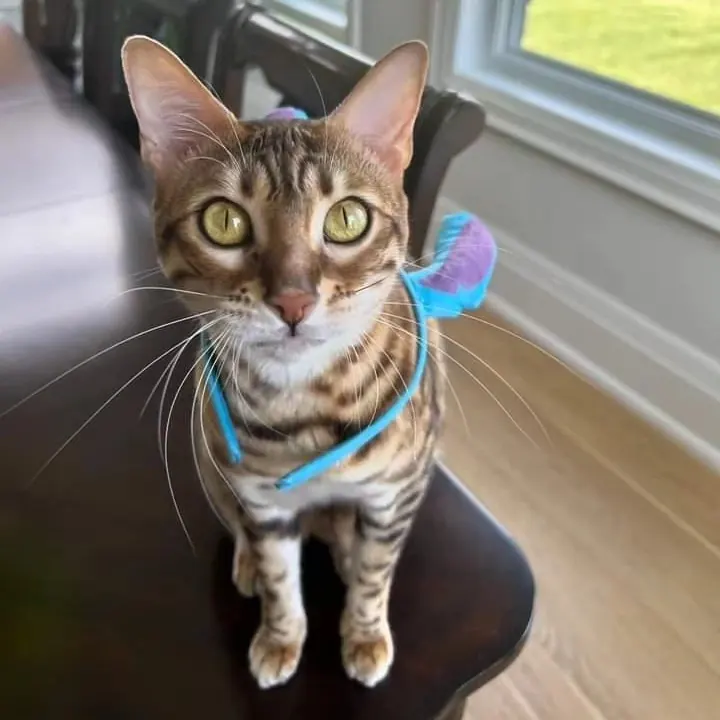
Explain the click before asking for a trick
Choose a tiny reward your cat likes. Make one quiet click, then give the reward immediately. Repeat a few times and stop while the cat is still interested. The sound predicts something good; it is not a command or a way to tell the cat off. If a clicker startles them, use a soft, consistent word instead.
Skill one: touch a target
Offer a safe target a short distance from the cat’s nose. When they voluntarily investigate or touch it, mark that moment and reward. Do not chase their face with the target. Move it only a little for the next repetition. This small skill can help you invite the cat onto a perch or into position without picking them up.
Skill two: choose the carrier
Leave the carrier open in the room, with comfortable bedding. Reward interest near it, then a step inside, then more of the body inside. Let the cat come out. Practise closing the door only after they are comfortable entering; start briefly and build gradually. Do not make every practice session end with a car trip.
Skill three: settle on a mat
Put a small mat in a quiet place. Reward a look, a step onto it or a moment of stillness. Over time, reward relaxed behaviour there. The mat gives the cat a predictable place to join you while you work or prepare dinner, rather than turning every counter visit into an argument.
Keep the sessions smaller than your ambition
Try a minute or two, then reassess. One successful repetition is worth more than ten frustrated ones. Train when the cat is awake and willing; do not withhold meals to force cooperation. Use small portions and include treats in the daily food allowance. Change only one thing at a time: distance, duration or distraction.
When it goes wrong, make the task easier
If your cat wanders off, pause. If they grab your hand, use safer reward placement and a less exciting setup. If they do not understand, reward an earlier step instead of repeating the cue louder. Training is a conversation built from consequences the cat can understand. It should leave both of you wanting another short session.
A quick checklist
- Mark the behaviour as it happens.
- Follow the marker with a reward.
- Let the cat choose to participate.
- End before either of you gets frustrated.