


Best Food for Bengal Cats: Dry, Wet or Raw?
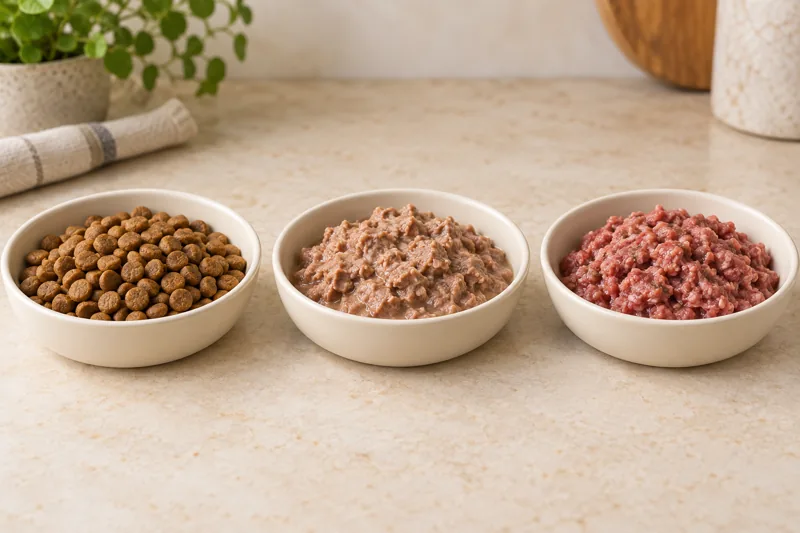
What is the best food for Bengal cats: dry, wet or raw? The bowl with the fanciest photograph does not win automatically. A good choice must nourish the whole cat, suit its age and digestion, and fit a routine you can maintain.
A carnivore needs more than a piece of meat
Bengals are cats, and cats are obligate carnivores. Animal-derived nutrients belong in their diet. But “meat is natural” is not a complete feeding plan: muscle meat alone does not supply every nutrient in the right proportions. Look for a complete and balanced food appropriate for kittens or adults, rather than a complementary meal or topper.
Dry food: practical, with portions that matter
Kibble is convenient to measure, store and use in food puzzles. Its concentrated calories make weighing portions useful, especially after neutering. Fresh drinking water must always be available. An expensive bag or a picture of a leopard tells you less than the nutritional information and the cat’s condition.
Wet food: moisture comes with the meal
Complete canned food offers another practical option. Wet food and moist raw diets provide more water with meals than kibble. That helps water intake, but is not a special kidney-protection property of raw meat. Keep opened food refrigerated according to its label and wash bowls regularly.
Why we chose raw at Jungle Kitten
We have tried different approaches over our years of breeding. We used to prepare food ourselves; today we buy commercially prepared raw diets. In our cats, we have observed good muscle condition, energy and beautiful coats, alongside smaller stools and less stool odour. These are our observations, not a promise that every Bengal will respond the same way.
At cat shows we pay close attention to condition and coat, but appearance cannot prove what a cat eats. Digestibility depends on the recipe, not simply on whether food is raw. Less stool is not a reason to ignore constipation, straining or a sudden change in litter-box habits.
Raw needs careful handling, not just enthusiasm
Raw food can carry harmful microbes, even when commercially made or frozen. Veterinary nutrition organisations have not established that it is healthier than a balanced cooked diet. Choose a nutritionally complete recipe, follow storage and thawing instructions, clean utensils and surfaces, and discuss suitability with your veterinarian, especially in households with vulnerable people. Adding substantial amounts of plain meat can upset a balanced recipe.
Let your Bengal vote, after checking the label
Ask local pet shops whether samples are available; some shops and manufacturers offer them. Try one suitable food at a time and transition gradually. Appetite matters, but so do comfortable digestion, stable body condition and a diet that meets nutritional needs. A Bengal’s enthusiastic opinion is useful. It is not a laboratory analysis.
We send familiar food home with our kittens. Keep that routine at first, then discuss changes. The best Bengal cat diet is one that is complete, well tolerated and safely handled, not necessarily the option with the loudest marketing.